Isometric Green Landscape with Pine Tree Assets
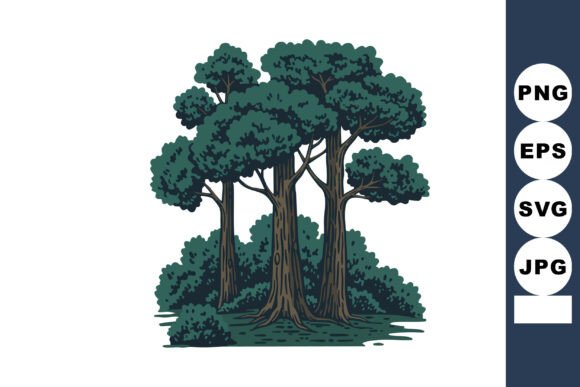
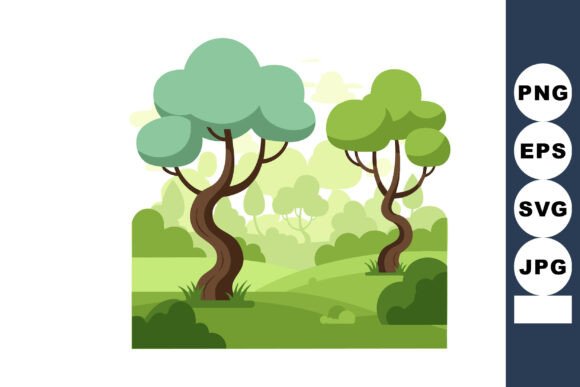
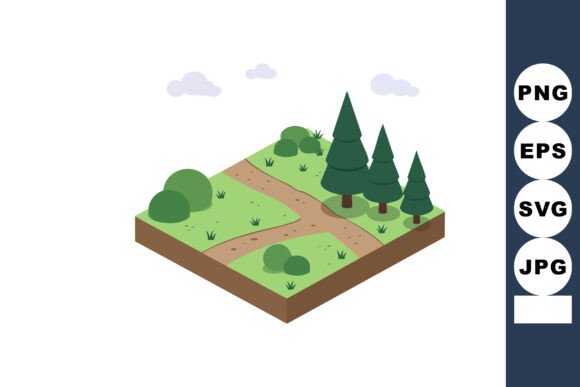
Creating a sense of tranquility and organic structure in digital design often requires more than just placing a stock photo on a page. The Isometric Green Landscape with Pine Tree vector asset offers a specialized solution for designers and content creators seeking to blend technical precision with natural aesthetics. This specific illustration features a carefully composed scene including pine trees, bushes, winding dirt paths, and soft clouds, all rendered in an isometric projection that creates a calm and natural mood. For professionals working on environmental themes, educational materials, or wellness branding, this asset bridges the gap between rigid geometric layouts and the fluidity of nature.
The value of this resource lies not only in its visual appeal but in its technical versatility. The downloadable ZIP package includes SVG, EPS, JPG, and PNG files, ensuring compatibility across various platforms and workflows. Whether you are building a scalable web interface, printing high-resolution marketing collateral, or creating social media graphics, having access to these four distinct formats eliminates the need for time-consuming file conversions or redrawing elements from scratch. Understanding how to leverage each format effectively can significantly streamline your production process while maintaining professional quality.
Enhancing Visual Hierarchy Through Isometric Projection
Isometric design serves a unique function in visual communication by presenting three-dimensional objects without the distortion of perspective vanishing points. When applied to natural elements like pine trees and landscapes, this style creates a stylized, orderly representation of nature that feels approachable rather than chaotic. For UI/UX designers and app developers, the Isometric Green Landscape with Pine Tree provides a modular aesthetic that aligns perfectly with grid-based interfaces. Unlike realistic photography, which can sometimes clash with flat user interface elements, this vector art maintains consistent line weights and color fields that harmonize with modern digital design systems.
This stylistic choice is particularly effective for gamification elements or interactive dashboards where users need to understand spatial relationships quickly. The dirt paths included in the composition act as natural leading lines, guiding the viewer’s eye through the layout without aggressive directional cues. In educational contexts, such as geography lessons or sustainability reports, this clear visual structure helps simplify complex environmental concepts. The isometric angle allows viewers to see the relationship between the trees, the ground cover, and the sky simultaneously, making it an excellent tool for explaining ecosystems or land management strategies where clarity is paramount.
Technical Flexibility Across Print and Digital Media
The inclusion of multiple file formats within the ZIP archive addresses one of the most common friction points in creative workflows: asset adaptability. Each format serves a specific purpose that directly impacts the final output quality and efficiency of your project.
- SVG (Scalable Vector Graphics): Essential for web development and responsive design. Because SVGs are code-based, they remain crisp on any screen resolution, from mobile phones to 4K monitors. You can also manipulate colors and sizes directly via CSS, allowing you to adapt the green hues of the pine trees or the opacity of the clouds to match different dark or light mode themes without opening a design editor.
- EPS (Encapsulated PostScript): The industry standard for professional printing and extensive editing. If you need to incorporate this landscape into a large-format banner, packaging design, or brochure, the EPS file ensures that edges remain sharp and colors accurate. It preserves layer information in compatible software like Adobe Illustrator, enabling you to separate the bushes from the background or adjust the path curvature.
- PNG (Portable Network Graphics): Ideal for quick integration into presentations, documents, or non-design software. The transparent background support means you can overlay the isometric landscape onto colored slides or existing layouts without worrying about white boxes or jagged edges. This is particularly useful for marketers creating pitch decks or educators preparing lecture slides who do not have advanced vector editing skills.
- JPG (Joint Photographic Experts Group): Best for universal compatibility and smaller file sizes. While it lacks transparency and scalability, the JPG version serves as a reliable fallback for email newsletters, legacy systems, or platforms that restrict vector uploads. It provides a compressed, ready-to-use image for situations where bandwidth or compatibility is the primary constraint.
Evoking Calm and Sustainability in Brand Communication
Visual tone plays a critical role in how audiences perceive a message, especially when dealing with topics related to mental health, ecology, or outdoor recreation. The specific combination of pine trees, soft clouds, and earthy dirt paths in this asset communicates stability and growth without relying on clichéd imagery. For wellness apps, meditation platforms, or therapy practices, the stylized nature of the isometric view reduces visual noise, supporting a user experience that feels safe and structured. The absence of human figures allows the viewer to project themselves into the space, making it a versatile backdrop for introspective or instructional content.
In the corporate sector, organizations focusing on ESG (Environmental, Social, and Governance) criteria often struggle to visualize abstract commitments. Using the Isometric Green Landscape with Pine Tree in annual reports or investor presentations can ground these concepts in tangible imagery. The organized nature of isometric art suggests that environmental stewardship is being managed with precision and care, rather than being treated as an afterthought. This subtle psychological cue can strengthen stakeholder confidence by associating natural values with professional competence. However, it is important to ensure that the stylized aesthetic matches the seriousness of the content; for highly technical scientific data regarding deforestation or climate change, a more literal visualization might be necessary to convey urgency.
Practical Applications for Diverse Professional Roles
Different professionals will find distinct utility in this asset based on their specific output requirements. Recognizing these use cases helps maximize the return on investment for your creative resources.
- Content Marketers and Bloggers: Featured images set the expectation for article quality. This landscape works exceptionally well for posts about remote work, digital nomad lifestyles, or eco-friendly business practices. The clean composition leaves adequate negative space for text overlays or headlines, reducing the need for additional graphic design work.
- Educators and Instructional Designers: Creating engaging e-learning modules requires visuals that maintain attention without causing cognitive overload. The isometric style breaks down natural environments into digestible components, making it easier to label parts of an ecosystem or illustrate step-by-step processes in agriculture or forestry training.
- Indie Game Developers: Asset creation is often the biggest bottleneck for solo developers. This vector pack can serve as a foundational element for tile-based strategy games, city builders, or relaxation simulators. Because it is vector-based, developers can extract individual assets like single trees or bushes to build custom maps while maintaining a consistent art style.
- Small Business Owners: For landscaping companies, garden centers, or outdoor gear retailers, professional custom illustration is often cost-prohibitive. This asset provides a polished, branded look for flyers, website headers, and social media ads at a fraction of the cost of commissioning original artwork, allowing small businesses to compete visually with larger brands.
Evaluating Fit and Customization Potential
While the Isometric Green Landscape with Pine Tree is a powerful tool, it is essential to assess its fit for your specific project before implementation. The stylized, low-poly adjacent aesthetic may not suit brands that rely on photorealism or gritty, textured visuals. If your brand identity is rooted in raw authenticity or luxury realism, this clean vector style might feel too synthetic. Additionally, because isometric art follows strict angular rules, integrating it with non-isometric elements can create visual dissonance. Designers should plan their layouts to either fully commit to the isometric perspective or use this asset as a distinct, contained vignette within a broader composition.
Customization is another factor to consider. While the SVG and EPS files allow for color adjustments, significant structural changes require vector editing proficiency. If you need to add specific types of vegetation or alter the terrain topology to match a real-world location, you must have the skills and software to modify bezier curves and anchor points. Users without these capabilities should treat the asset as a final, read-only element. Despite these considerations, the comprehensive file selection and cohesive mood make this asset a practical, high-value resource for anyone looking to infuse their digital projects with a sense of organized, natural serenity. By selecting the appropriate format and respecting the stylistic boundaries, creators can efficiently elevate their visual storytelling while saving valuable production time.