Enhancing Digital Designs with the Green Trees Landscape Vector Illustration
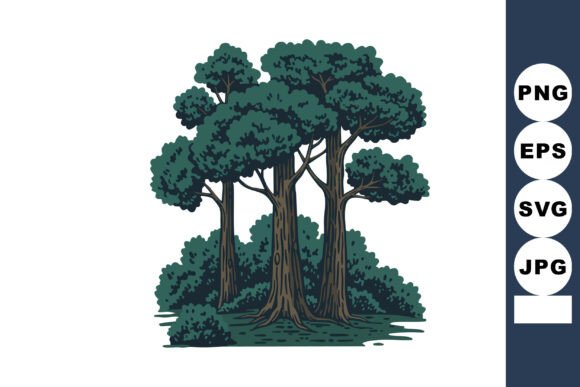
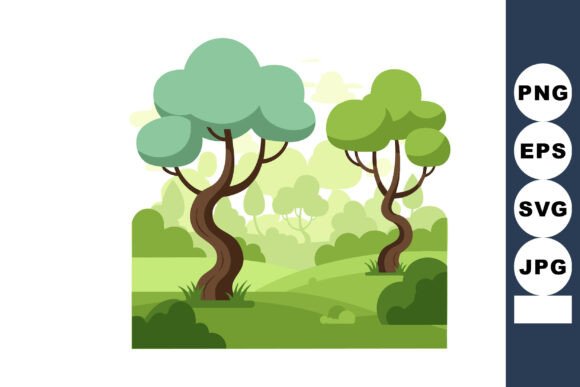
In the fast-paced world of graphic design and digital content creation, finding assets that balance aesthetic appeal with technical versatility is a constant challenge. Designers often spend hours searching for imagery that conveys a specific emotion without requiring extensive post-production work. The Green Trees Landscape Vector Illustration addresses this need by offering a pre-composed scene that radiates tranquility and organic beauty. This specific asset depicts green trees with distinctively curved trunks set against rolling hills, surrounded by lush bushes under soft daylight. Beyond its visual charm, it serves as a practical tool for professionals who require scalable, editable graphics for diverse projects.
The Psychology of Soft Daylight and Organic Curves
Visual communication is rarely just about what is shown; it is equally about how it makes the viewer feel. The composition of this landscape leverages several psychological triggers associated with peace and safety. The use of soft daylight, rather than harsh shadows or dramatic sunsets, creates an even, welcoming atmosphere. In marketing and user interface design, this type of lighting reduces cognitive load, allowing the viewer to process information more comfortably. It suggests clarity, morning freshness, and new beginnings, making it an ideal backdrop for wellness brands, educational platforms, or eco-friendly initiatives.
Furthermore, the stylistic choice of curved trunks plays a significant role in the illustration's mood. Sharp angles and rigid lines often signal danger, technology, or urgency. In contrast, the flowing, organic curves of the tree trunks and the undulating rolling hills mimic natural patterns found in biology. These shapes are inherently soothing to the human eye. When integrated into a website header or a brochure, these curves guide the viewer’s gaze gently across the layout, improving visual flow without creating distraction. The surrounding bushes add texture and depth, grounding the trees and preventing the scene from feeling sterile or overly minimalist.
Technical Versatility Across File Formats
A beautiful image is only useful if it fits the technical requirements of the project. One of the primary advantages of acquiring the Green Trees Landscape Vector Illustration is the inclusion of multiple file formats within a single downloadable ZIP archive. Understanding when to use each format is essential for maintaining quality and workflow efficiency.
- SVG (Scalable Vector Graphics): This is the gold standard for web design. SVG files are XML-based, meaning they can be scaled to any size without losing resolution. More importantly, they are code-editable. A developer can change the color of the green trees or the hue of the rolling hills directly via CSS or within the SVG code itself. This makes the asset incredibly responsive for modern websites that must adapt to mobile screens, tablets, and large desktop monitors simultaneously.
- EPS (Encapsulated PostScript): While similar to SVG, EPS remains the industry standard for print production and legacy vector software compatibility. If you are designing a large-format banner, vehicle wrap, or packaging where the artwork needs to be sent to a professional print shop, the EPS file ensures that the curves of the trunks and the details of the bushes remain crisp at massive scales. It preserves vector data in a way that raster programs cannot.
- PNG (Portable Network Graphics): Not every platform supports vector files. For social media posts, email newsletters, or presentation slides, the PNG format provides a high-resolution raster alternative with support for transparency. This allows designers to overlay the peaceful landscape onto colored backgrounds or textured layouts without worrying about jagged edges or white boxes around the image.
- JPG (Joint Photographic Experts Group): Best suited for photographic contexts or environments where file size is a strict constraint. While it lacks transparency and infinite scalability, the JPG version offers immediate compatibility with virtually every device and software application, serving as a reliable preview or placeholder asset.
Practical Applications in Modern Workflows
The utility of this vector illustration extends far beyond generic decoration. Its specific characteristics make it a strategic asset in several key industries. In the realm of sustainable branding, companies often struggle to visualize their commitment to nature without resorting to cliché stock photography. This stylized representation offers a middle ground—it is clearly nature-inspired but abstract enough to serve as a brand symbol rather than a literal photograph. The green palette reinforces environmental messaging instantly, reducing the need for excessive explanatory text.
In User Experience (UX) and User Interface (UI) design, empty states and onboarding screens are critical touchpoints. When a user has no data to display or is learning a new app, a hostile or blank screen can increase churn. Inserting this peaceful landscape creates a moment of pause and reassurance. The soft daylight and gentle hills communicate patience, suggesting that the application is calm and user-centric. Because the asset is vector-based, UI designers can easily extract individual elements—using just the curved trees for one screen and the rolling hills for another—to create a cohesive visual language throughout the product.
Educational content creators also find immense value in this style. Textbooks, e-learning modules, and children’s apps require visuals that maintain engagement without overstimulating the learner. The balanced composition of the Green Trees Landscape Vector Illustration provides visual interest that supports text rather than competing with it. The clear separation between foreground bushes, mid-ground trees, and background hills helps teach concepts of depth and layering, while the peaceful mood aids in retention and focus.
Customization and Editability Considerations
Choosing a vector asset is often a decision based on future-proofing. Unlike raster images, which are static pixels, this illustration allows for deep customization. Before implementing the asset, designers should consider how it might need to evolve. Can the greens be adjusted to match a specific corporate Pantone color? Is the density of the bushes appropriate for the amount of negative space required for text overlay?
Because the source files include editable vectors, the answer is usually yes. However, effective customization requires an understanding of layer structure. When opening the EPS or SVG in software like Adobe Illustrator or Affinity Designer, users will typically find grouped elements. This organization allows for non-destructive editing. You might decide to simplify the bushes for a mobile icon version or exaggerate the curve of the trunks for a more whimsical poster design. This flexibility significantly increases the return on investment for the asset, as a single download can yield dozens of unique variations tailored to different campaigns or seasonal updates.
Integrating Nature into Digital Spaces
As digital environments become increasingly saturated with synthetic aesthetics, there is a growing counter-movement toward biophilic design. This concept posits that humans have an innate tendency to seek connections with nature and other forms of life. Incorporating elements like the Green Trees Landscape Vector Illustration into digital products is not merely a stylistic choice; it is a functional strategy to improve well-being and engagement. Studies in environmental psychology suggest that even representations of nature can lower stress levels and improve cognitive function.
For web developers and content strategists, this means that selecting the right imagery is part of the accessibility and usability equation. The soft daylight in this illustration avoids high-contrast flashing or jarring colors that might trigger sensitivity issues, making it a safer choice for inclusive design. Furthermore, the vector nature of the file contributes to performance optimization. A well-coded SVG of this landscape can be significantly smaller in file size than a compressed JPEG, leading to faster load times and better Core Web Vitals scores. In an era where page speed directly impacts SEO rankings and user satisfaction, choosing efficient, scalable vector art is a smart technical decision.
Ultimately, the value of this asset lies in its ability to bridge the gap between artistic expression and practical utility. It captures a specific, peaceful mood through deliberate design choices—curved trunks, rolling hills, soft light—while providing the technical foundation necessary for professional application. Whether used to soothe users in a healthcare app, reinforce sustainability in a corporate report, or simply add a touch of organic warmth to a minimalist layout, this illustration proves that functional design and emotional resonance can coexist beautifully. By leveraging the included SVG, EPS, JPG, and PNG files, creators ensure that this sense of peace translates flawlessly across every medium and device.