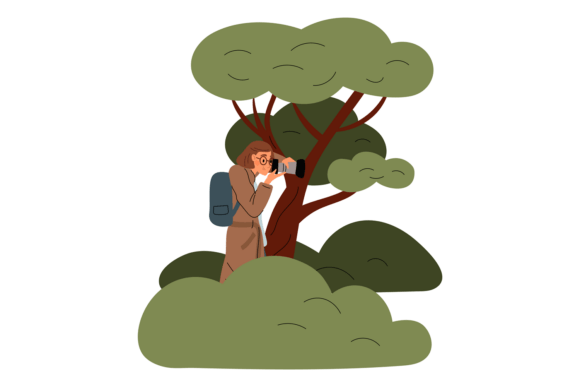
Cartoon Private Detective Character Hide: Enhancing Visual Storytelling and Design
In the world of graphic design, editorial illustration, and digital content creation, finding the perfect visual metaphor for investigation, secrecy, and information gathering can be a significant challenge. The specific concept of a cartoon private detective character hide serves as a versatile visual asset that bridges the gap between serious investigative themes and approachable, engaging aesthetics. When designers and content creators search for imagery depicting a woman in a hat and raincoat making photos or a female investigator spying from behind foliage, they are looking for more than just a picture; they are seeking a narrative tool that communicates privacy, intelligence, and observation without the intimidation factor of realistic surveillance imagery.
Understanding the Visual Concept and Its Purpose
A cartoon private detective character hide is typically a vector-based illustration featuring a stylized female investigator concealed within an environment, such as bushes or urban shadows. Unlike photorealistic stock photography, which can sometimes feel invasive or overly grim when depicting surveillance, the flat comic style offers a layer of abstraction. This abstraction is crucial for adult audiences in professional settings who need to discuss sensitive topics like data privacy, corporate compliance, background checks, or cybersecurity.
The specific elements of this archetype—the raincoat, the hat, the camera, and the concealment—serve as immediate semiotic shortcuts. The raincoat suggests preparation and resilience against external elements. The hat obscures identity, reinforcing the theme of anonymity. The act of hiding in bushes or behind objects visually represents the concept of "deep diving" into data or observing without interfering. For businesses and educators, utilizing a cartoon private detective character hide allows them to visualize the act of collecting information in a way that feels safe, ethical, and intellectually curious rather than predatory.
Addressing Common Design and Communication Challenges
Professionals often encounter specific hurdles when trying to illustrate abstract concepts related to investigation and research. Understanding these pain points helps clarify why this specific type of vector illustration is so valuable.
Softening Sensitive Topics
When creating content about fraud detection, internal audits, or competitive intelligence, realistic imagery can trigger negative emotional responses. A photograph of a person hiding in bushes might imply stalking or illegal trespassing. In contrast, a female collects information in a flat vector comic style signals that the activity is procedural, authorized, and analytical. This stylistic choice helps maintain a professional tone while keeping the audience engaged.
Scalability Across Media Formats
Modern content strategies require assets that work across multiple touchpoints. A raster image (JPG) of a complex scene may lose quality when resized for a mobile app icon or a large trade show banner. Vector EPS formats of a cartoon private detective character hide solve this problem entirely. Because the artwork is mathematically defined, it remains crisp whether it is printed on a business card or displayed on a 4K monitor. This scalability is essential for brands that need consistent visual language across web, print, and presentation decks.
Customization and Brand Alignment
Generic stock photos rarely match a company’s specific color palette or brand voice. Vector illustrations allow designers to modify colors, adjust proportions, and swap elements to align with corporate identity. If your brand uses a specific shade of teal for trust and security, a customizable vector detective can be recolored instantly to match, ensuring the cartoon private detective character hide feels like a native part of your ecosystem rather than an afterthought.
Practical Applications and Strategic Implementation
The utility of an investigator spying illustration extends far beyond decorative filler. Below are practical scenarios where this visual asset drives tangible outcomes.
- Cybersecurity Awareness Training: Use the image to represent "watchful" software or employee vigilance against phishing. The cartoon style reduces anxiety around security protocols while emphasizing the importance of observation.
- Market Research Reports: Illustrate sections on competitor analysis or consumer behavior tracking. The woman in a hat making photos becomes a mascot for thorough, evidence-based research methodologies.
- Legal and Compliance Documentation: Break up dense text in policy documents regarding due diligence or whistleblower protections. The friendly yet focused aesthetic makes dry material more digestible.
- Editorial Content and Blogging: Enhance articles about private investigation, journalism ethics, or OSINT (Open Source Intelligence). The visual reinforces the article's theme of uncovering truth through careful study.
- Educational Materials: Teach students about the scientific method, historical research, or critical thinking. The detective archetype embodies curiosity and the systematic collection of evidence.
Technical Considerations for Optimal Usage
To maximize the effectiveness of a cartoon private detective character hide, users must approach file selection and implementation with technical awareness. While JPG files are convenient for quick web use, professionals should prioritize EPS or AI source files whenever possible.
Layer Management: High-quality vector files should have organized layers. This allows you to isolate the detective from the background bushes, enabling you to place the character in different environments relevant to your specific project. You might need the investigator spying in an office setting one day and in a digital landscape the next.
Style Consistency: Flat comic style illustrations rely on bold shapes and limited color palettes. When integrating this asset into a broader design system, ensure that the line weight and shading technique match your other icons and graphics. Mixing hyper-detailed vectors with minimalist flat art can create visual dissonance that distracts from your message.
Licensing and Ethics: Always verify the usage rights associated with the illustration. Even though the subject matter involves "spying," the asset itself must be legally cleared for commercial use. Furthermore, consider the context of deployment; ensure the humorous nature of the cartoon does not trivialize serious real-world investigations or legal proceedings.
Tailoring the Approach for Different User Needs
Different stakeholders interact with this visual concept in unique ways based on their end goals.
Graphic Designers focus on compositional flexibility. They look for negative space around the character to accommodate headlines or call-to-action buttons. For them, the "hide" aspect provides natural framing opportunities within the layout.
Content Marketers prioritize emotional resonance. They select variations of the female investigator that convey competence and approachability. They might prefer a version where the detective is smiling slightly or holding a notebook rather than a telephoto lens, shifting the connotation from surveillance to research.
Educators and Trainers value clarity and universality. They need a cartoon private detective character hide that transcends cultural barriers and clearly communicates the concept of "looking for answers." Simplicity in the vector lines ensures the message is understood quickly by diverse learners.
Making the Right Selection for Your Project
When browsing libraries for a woman in a hat and raincoat making photos, evaluate the illustration against your specific communication objectives. Ask yourself if the level of concealment matches the level of discretion required by your topic. Is the character actively taking a photo, suggesting documentation? Or is she merely observing, suggesting patience and analysis?
The most successful implementations treat the cartoon private detective character hide not as a generic clip-art insertion, but as a deliberate storytelling device. By leveraging the unique combination of flat vector aesthetics and investigative symbolism, professionals can transform abstract concepts of data collection and privacy into compelling, memorable visual narratives. Whether used to explain complex security protocols or to add personality to a market research deck, this specific illustration style offers a sophisticated solution to the perennial challenge of visualizing the unseen work of investigation.