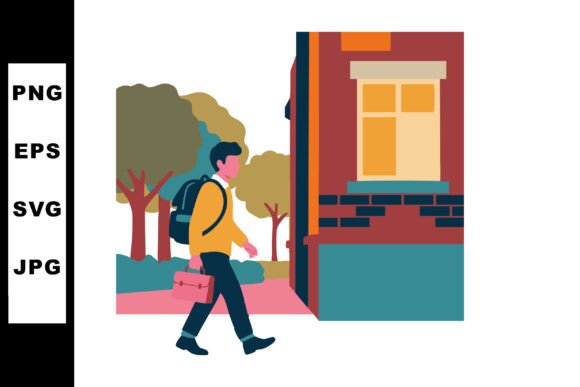
Man Walking Outdoors Carrying Briefcase Visual Asset
Visual storytelling often hinges on a single, evocative image that captures a specific mood without needing explanatory text. The illustration of a man walking outdoors carrying a briefcase serves as a powerful visual metaphor for professional transition, daily routine, and focused determination. Set against a backdrop of autumn foliage with trees and bushes framing a building, this artwork conveys a sense of calm productivity rather than frantic urgency. For designers, marketers, and content creators, this specific combination of elements offers a versatile asset that bridges the gap between corporate professionalism and organic, human-centric branding.
Unlike generic stock photography that can feel sterile or overly staged, this illustration carries a distinct personality. The autumn color palette introduces warmth and nostalgia, softening the typically rigid association of business attire and briefcases. It suggests a narrative of balance—work integrated with nature, ambition tempered by mindfulness. When incorporated into brand identity projects or editorial layouts, this visual establishes an immediate emotional connection with audiences who value authenticity over polished perfection. It is particularly effective for brands in coaching, financial planning, lifestyle publishing, or remote work services where the goal is to project stability alongside approachability.
Strategic Applications Across Digital and Print Media
The versatility of this illustration lies in its ability to adapt to various contexts while maintaining its core message. In web design, it functions exceptionally well as a hero image for landing pages focused on career development, seasonal promotions, or wellness-oriented business services. The negative space typically found around the figure and the building allows for easy overlay of typography without compromising readability. When paired with a clean sans serif font for headlines and a complementary serif font for body copy, the image anchors the page layout, guiding the user’s eye naturally from the visual focal point to the call-to-action.
For social media graphics, the autumnal tones provide high contrast against standard platform interfaces, increasing stop-rate during scrolling. Marketers can use this asset to illustrate blog posts about work-life balance, seasonal business shifts, or professional milestones. The illustration style itself communicates creativity and thoughtfulness, distinguishing your feed from competitors relying solely on text-based templates or impersonal 3D renders. In print applications such as annual reports, brochures, or packaging design, the vector formats (SVG and EPS) ensure crisp reproduction at any scale, from small business cards to large-format signage, without pixelation or loss of detail.
Elevating Brand Perception Through Visual Consistency
Choosing the right imagery is as critical as selecting the right typeface. Just as a premium font signals quality and attention to detail, a cohesive illustration style reinforces brand recognition. This specific asset works best when aligned with a broader visual system that values organic textures and muted, natural color schemes. If your brand voice is empathetic, grounded, and professional, this illustration acts as a visual shorthand for those attributes. Conversely, if your brand relies on futuristic tech aesthetics or neon cyberpunk themes, this asset would create cognitive dissonance rather than harmony.
Consistency extends beyond color matching. It involves maintaining a unified tone across all touchpoints. Using this illustration in conjunction with handwritten font accents can enhance the personal, artisanal feel, whereas pairing it with a structured modern typography system leans into corporate reliability. Designers should evaluate how the illustration interacts with existing design assets. Does it share similar line weights, shading techniques, or color grading with other icons and graphics in your library? Ensuring these elements align prevents the image from looking like an afterthought and instead integrates it seamlessly into your brand identity.
Technical Considerations and File Format Selection
The downloadable ZIP package includes SVG, EPS, JPG, and PNG files, each serving distinct technical purposes. Understanding when to deploy each format is essential for maintaining visual integrity and optimizing performance.
- SVG (Scalable Vector Graphics): Ideal for responsive web design and digital interfaces. SVGs are code-based, meaning they scale infinitely without losing quality and can be styled with CSS. Use this format for logos, icons, or illustrations that need to adapt to different screen sizes. They also offer smaller file sizes compared to raster images, improving page load speeds and SEO performance.
- EPS (Encapsulated PostScript): The industry standard for professional printing and large-format output. EPS files preserve vector data for editing in Adobe Illustrator or CorelDRAW. Choose this format when preparing materials for offset printing, billboards, or merchandise where resolution independence is non-negotiable.
- PNG (Portable Network Graphics): Best for digital use requiring transparency. PNGs support alpha channels, allowing the illustration to sit cleanly over colored backgrounds or textured surfaces without white boxes. Use this for social media overlays, email newsletters, or presentation slides where background flexibility is needed.
- JPG (Joint Photographic Experts Group): Suitable for photographic contexts or when file size must be minimized for quick loading. JPGs do not support transparency but handle complex color gradients efficiently. Reserve this format for blog post thumbnails, preview images, or situations where transparency is unnecessary and bandwidth is limited.
Practical Guidance for Integration and Licensing
Before deploying this asset, conduct a thorough evaluation of your project’s specific needs. Test the illustration in grayscale to ensure it maintains clarity and impact without relying solely on color. Verify that the composition leaves adequate breathing room for accompanying text; overcrowding diminishes both the image’s power and the readability of your message. When testing font pairings, consider the illustration’s line quality. Delicate, sketch-like lines pair better with lighter type weights, while bold, graphic illustrations can carry heavier display fonts.
Licensing is another critical consideration for commercial projects. Always review the specific license terms included with your download. Some licenses permit unlimited commercial use across client projects, while others restrict usage to personal work or require attribution. For agencies and freelancers managing multiple clients, ensuring proper licensing protects both you and your clients from legal complications. Document the license scope in your project files to streamline future audits or expansions.
Beyond technical specs, think about audience resonance. Adults aged 20–50 respond to imagery that reflects their lived experiences. The man walking with a briefcase in autumn doesn’t just depict “business”; it depicts a moment in time that many professionals recognize—the commute, the transition between spaces, the quiet focus before a meeting. This specificity creates engagement that generic alternatives cannot replicate. Whether you’re crafting a newsletter header, designing a book cover, or building a logo design concept, leverage this emotional authenticity to create work that feels intentional and human.
Ultimately, successful integration of this illustration depends on treating it as a collaborative element within your design system rather than a standalone decoration. Align it with your typographic choices, respect its technical requirements, and honor its narrative potential. When executed thoughtfully, this asset becomes more than just a picture of a man walking—it becomes a cornerstone of visual communication that speaks directly to the aspirations and rhythms of modern professional life.